Description

melanie pullen

16 March 2012

I was first introduced to Melanie Pullen's High Fashion Crime Scenes, a series of photographs based on vintage crime-scene images, first-hand accounts, and documents the artist culled from the archives of the Los Angeles Police Department and County Coroner's Office, by a colleague while doing my Master's in the History of Art, Design, & Vuisual Culture.We shared a love of the grotesque and macabre (although she professed a greater love for high fashion than I did), so when she presented the images to me I was immediately struck by their disturbing beauty and surreal, almost cinematic quality, but also by the compelling stories underlying the works.

Pullen began the project after reading a copy of Luc Sante's 1992 book, Evidence (1914-1919), chronicling early-twentieth-century crime scene photos from the New York Police Department. As she recounts, she became so fascinated with the details and artful framing of the images that she almost didn't notice the crimes, their violence and gruesomeness receding into the background. Intrigued by the ways in which we have become desensitized to violent images in contemporary visual and media culture, she re-creates the crime scenes and styles the photos to draw out these details, outfitting her "victims" in haute couture and bold, saturated colours. In doing so, she employs the power of the cultures of fashion and beauty to distract, to divert our attention away from what are otherwise deeply disturbing events and subjects, while nevertheless allowing this violence to ambiguously lurk in the background. All of the photos in the series are based on real crime scenes and speak to real tragedies, however buried in the past or lost in archives they may seem. It is these haunting and inaccesible back stories that drives the series and that Pullen seeks to evoke, examining our desensitized, glamourized relationship to violent imagery. At the same time, however, she also celebrates the history of crime scene photography, paying homage to photographers like Eugene Atget, Alexander Gardner, Jacob Riis, and Arthur Fellig (aka Weegee) who often worked as both artists and professional photographers, producing artistic crime scene photos that were evocative of tabloid illustrations or film noir at the same time that they documented violent and gruesome events.


Melanie Pullen, Anna & The Grass, 2003


Melanie Pullen, Dorothy (Barrel Series), 2003


Melanie Pullen, Half Prada (Hanging Series), 2003


Melanie Pullen, Miyake (Metro Series), 2005


Melanie Pullen, Last Light, 2004


Melanie Pullen, Red (Water Series), 2005


Melanie Pullen, Mr. Rossi, 2004


Melanie Pullen, Caovilla, 2004


Melanie Pullen, Phones, 2005


Melane Pullen, Oscar's Grass, 2005


Melanie Pullen, Blue (Water Series), 2005


Melanie Pullen, Milla's Welcome, 2004


Melanie Pullen, Hugo's Camera, 2004


Melanie Pullen, The Weitzman File, 2004


Melanie Pullen, Self-Portrait, 2003


Melanie Pullen, Mirror (Hanging Series), 2005


Melanie Pullen, Renee's Tree, 2004


Melanie Pullen, Rebecca, 2004


33 - featured artist: kate macdowell

03 August 2011

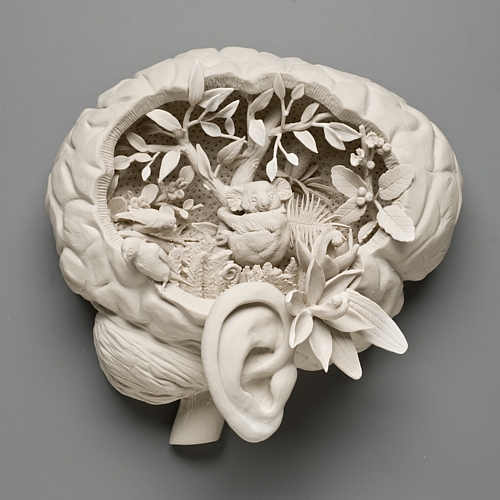
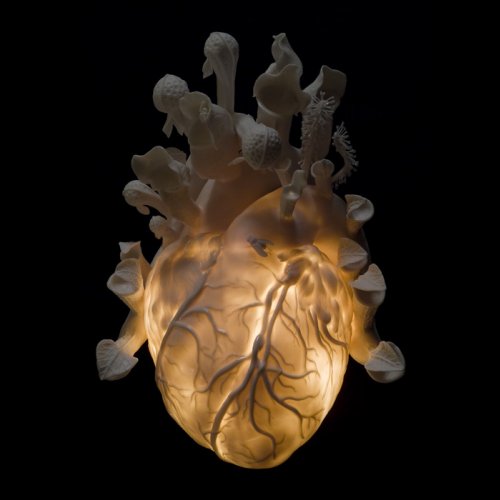
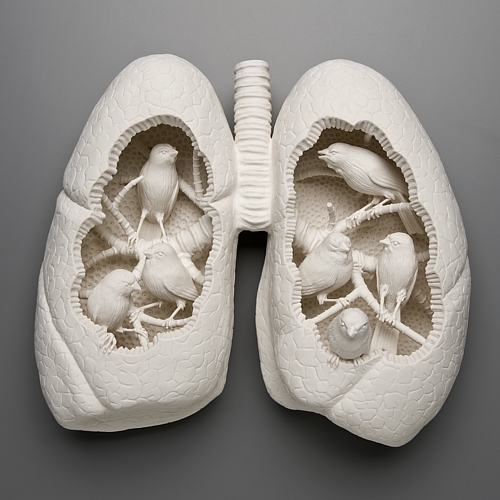
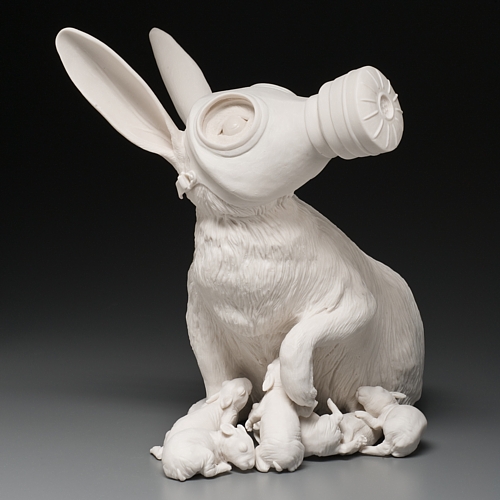
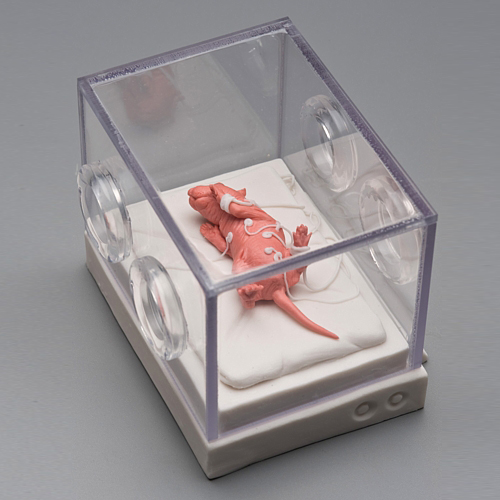
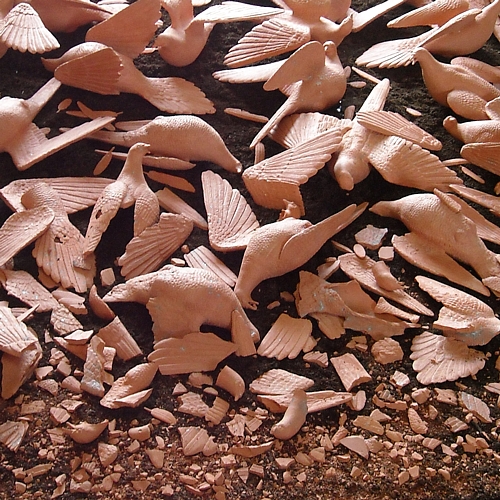
American artist Kate MacDowell combines human, animal, and plant forms with art historical and mythological references to explore our increasingly fraught relationship with the natural world. at once strangely beautiful and deeply disturbing, her meticulously hand-sculpted works in porcelain evoke the uneasy tension between our romantic ideal of being united with nature, and the impossibility of ever fully doing so, in part because of our devastating impact on the environment. decaying animal carcasses reveal inner structures comprised of anthropomorphic anatomical forms; an outstretched arm reminiscent of Michelangelo's iconic image of the hand of God giving live to Adam seemingly longs for a union with nature; luminous human organs radiate with an uncanny juxtaposition of human and plant or animal life; animals equipped with safety gear attempt to protect themselves from man-made environmental threats, while for others it is already too late. 

intricately preserved in porcelain, these part human/part natural specimens attest to our intimately bound relationships with one another. at the same time, the inherent fragility of the porcelain gestures to the impermanence and vulnerability not only of endangered animals and ecosystems, but also of our own existence. with an acute sensitivity and awareness, the artist brings this disquieting relationship to life.

i love everything about Kate's work: her vision, craftsmanship, aesthetic, thoughtfulness, astuteness, and of course, her choice and use of material. i couldn't think of a better artist to start off a new featured artist series.


all images copyright Kate MacDowell.

11 - time wasting experiment

17 April 2011

as i prepare to re-launch the arterie [blog] after nearly a year hiatus, i am left thinking not just about the passage of time, but about how we both spend and waste time. granted, since i last posted i completed, defended, and submitted a master's thesis on representations of the cancerous body in medical discourse and contemporary art; packed up my apartment in two weeks and drove across the country in a bush-ready 1995 Jeep YJ pulling a U-Haul trailer with my partner and our cat -- an extended adventure during which we broke down in the Canadian prairies three times; arrived in Montreal in an empty apartment the day before i started my PhD with none of my belongings while also having to part from my boyfriend and best friend, who was starting a forestry program in our home province of Ontario, for a year of long-distance after five years of living together and intimately sharing each other's daily lives; and successfully completed a year of graduate coursework in art history in addition to serving as co-president of my department's Graduate Student Association (GSA) as well as a member of our conference committee (The Indiscernible), and preparing submissions to conferences and journals. in the midst of all this craziness, i have somehow found time to pursue my love and the art of making things by hand with the goal of launching my Etsy shop(s) in May 2011. and yet, despite all of these achievements (i am still apprehensive to call them that), i still feel like i have wasted time. like i could have done more, been more productive and focussed and less distracted. or, in perhaps doing too much, i could have taken better care of myself or achieved that truly unattainable thing: balance.

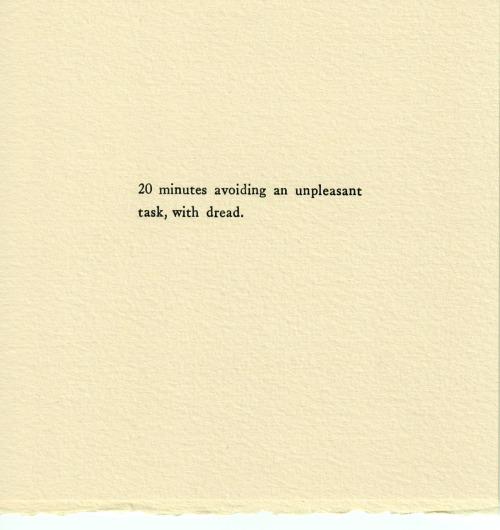
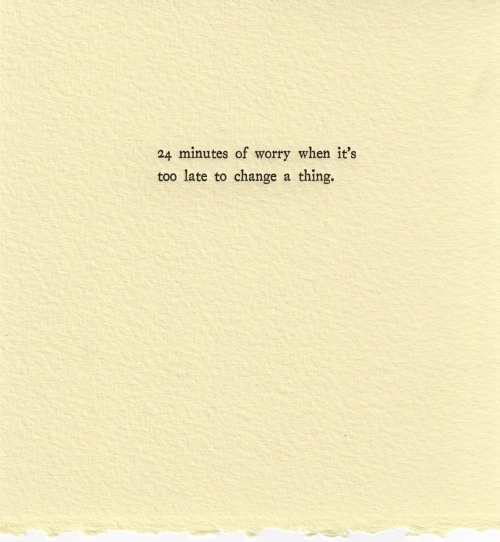
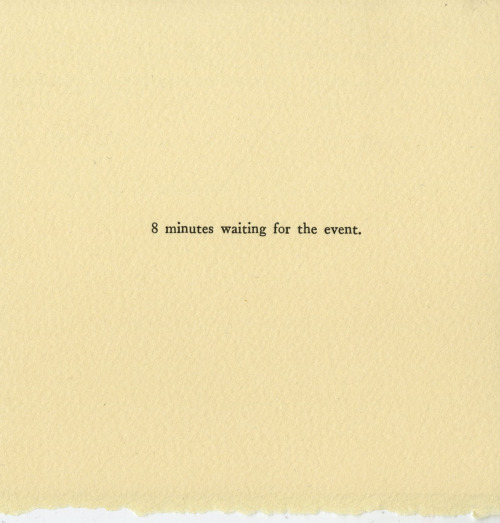
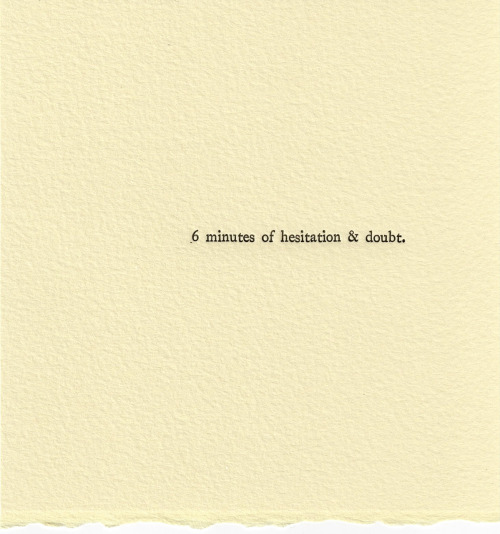
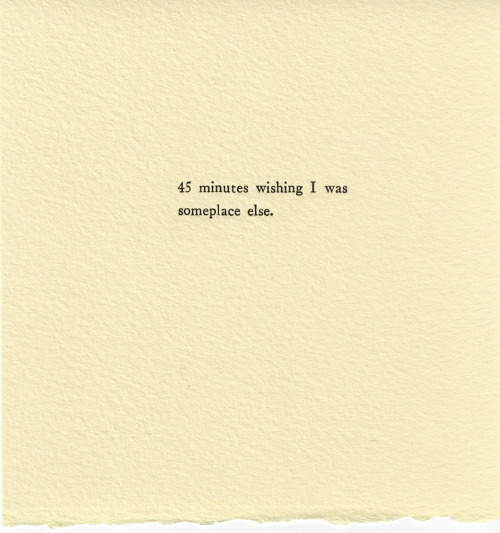
and so this brings me to the real topic of this post: Alyson Provax's brilliant time wasting experiment, an ongoing project in which the artist documents the exact time wasted on various activities and non-activities in a series of letterpress prints. driven by a "compulsion to always be doing things and producing objects," -- one that i full heartedly share -- she also conceives of the prints as permission slips allowing us to thoughtfully spend periods of time in wasteful ways. in other words, it is ok to spend time thinking about nothing or working through overwhelming and even embarrassing emotions. sometimes we need to be able to do "nothing" and not feel bad or guilty about it. there is, after all, unparalleled magic in daydreaming and imagining. it's how ideas take root.


visit Alyson's Etsy shop for your own time wasting permission slip, or read more about her project and what the artist has to say here and here.

all images copyright Alyson Provax.

forestière All rights reserved © Blog Milk Powered by Blogger